

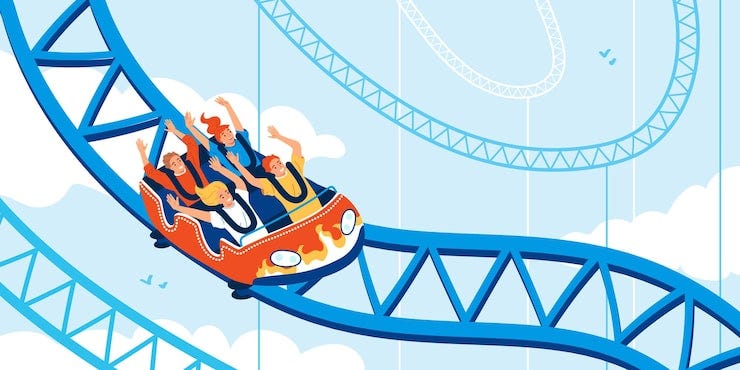
Since I am not a fan of roller coasters, I was particularly annoyed by the events of this past week—especially the doomsday news surrounding AI.
I recently listened to a friend “yeah, but” her way through the end of the world as we know it. My response? “This is a red herring.”
According to my friend Miriam, the term originates from the practice of dragging a dried, cured herring across a trail to confuse hunting dogs—something designed specifically to distract attention from the real issue.
While I agree that AI, autonomous cars, delivery robots, and even the seemingly benign Roomba cleaning our floors could theoretically turn into HAL 9000 and start reading our lips, I have more faith in everyday human common sense to prevent that from happening.
Lessons from History
As an historical researcher, I couldn’t resist searching for “reactions to inventions throughout history.” I carefully tiptoed past the top AI-generated responses and landed on an article titled “How People Reacted to Greatest Inventions in History: From Printing Press to Generative AI.”
The article concludes with a point worth remembering:
“All in all, throughout history, people have been both excited and terrified by new inventions. Whether it’s the printing press, the telephone, the computer, or generative AI, each new technology has faced its own set of challenges and uncertainties. However, as we look back on these inventions today, it’s clear that they have all played a significant role in shaping the world we live in.”
In the September 9th article of the Guardian, examining whether AI could pose an existential threat in the next decade asked a simple question: How seriously should we actually take these warnings?
Here are three key takeaways from that discussion:
1. Control over apocalypse “AI is not going to go away,” said David Barber, director of Centre for Artificial Intelligence at UCL. “It’s incredibly useful, whether or not you allow it in a fully unconstrained way to access the internet and various systems that’s potentially problematic. We may need to learn how to better control these things... What we need as a country is to get to grips with the duality that is both an incredibly important and useful technology, and at the same time, it’s something that needs to be carefully thought about and carefully controlled.”
2. Real threats vs. Hollywood scenarios Sandra Wachter, a professor at the Oxford Internet Institute, noted that she does not believe in “Terminator scenarios,” but rather that AI poses real, immediate threats—including environmental impact, misinformation, and job displacement.
“These problems are real and urgent and need addressing now,” she said. “Terminator scenarios are a big distraction from real issues.”
3. Hype versus alignment Gary Marcus, an AI industry commentator and academic, added: “There is a difference between superintelligence that is aligned (if such a thing is possible) and superintelligence that is not. It is at least conceivable that the former might be net positive. So far we have neither, but a superabundance of hype combined with a striking lack of prudence on OpenAI’s part has gotten us where we are, with intense mistrust all around.”
Sandra Wachter and I are in complete agreement: the existential AI threat is a red herring distracting us from immediate, practical concerns.
How I Use AI in My Process
I write a carefully researched Substack article every week. I don’t have a staff, and like anyone writing regularly, I am prone to the occasional typo or awkward sentence. Above all, I want my articles to be well-structured and easy to read.
As a member of the Maryland Writers’ Association, I have access to wonderful resources and workshops. When generative AI first emerged, I made it a point to learn how to use it responsibly as an author—which led me to a guide on AI Best Practices for Authors, navigating the technology’s implications for the writing profession.
It is a fantastic resource whenever you’re in doubt about how to use AI effectively and ethically.
To be completely transparent about my process: I draft my thoughts myself, and then I submit my rough draft to Gemini to help critique the structure, format it clearly for Substack, catch typos, and suggest visual placement ideas.
Stepping Off the Coaster
This week, I am choosing not to ride the news roller coaster. I am stepping back from covering the overwhelming cycle of heavy news—from the anniversary of 9/11, tariffs, and trade wars to midterm elections, natural disasters, and political debates.
Instead, I am taking a breath. I’ll be spending my time reading, Restacking, and engaging directly with the comments across the Substack communities I subscribe to.

Gemini
Here is the Gemini Editorial Critique of my draft:
Tightening the Red Herring & Miriam setup: The opening transitions very quickly into the definition. Letting the dialogue breathe slightly before bringing in Miriam makes the introduction feel much more natural.
Contextualizing the AI Hal comparison: The transition from Roomba to HAL 9000 is great, but adding a tiny bit of connective tissue makes the analogy hit harder.
Citation & Formatting of Quotes: The Guardian quote was restructured using blockquotes to make the three takeaways distinct and readable on mobile.
Flowing into the Author Perspective: The transition into how you personally handle Substack and AI as a researcher works well. Fixing minor punctuation and spacing makes your voice sound sharp, authoritative, and human.
Gemini asked if I wanted further help and I answered, “I think we did a good job and I can take it from here. Have you learned to read lips?”
Gemini, “Not yet—so your screen is completely safe from me peering over your shoulder!”
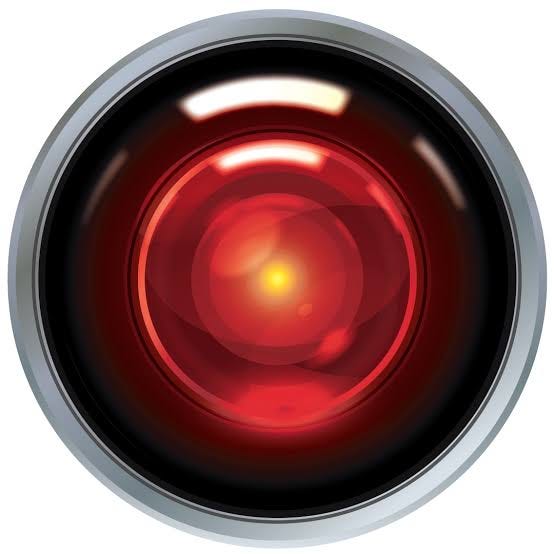
HAL 9000 from 2001: A Space Odyssey — Free vector art - Design-Kink
In full disclosure, there were slight changes to a few of my original sentences that improved flow but kept my thoughts. There were also a couple of places where I corrected Gemini.
I would like to read your concerns and comments regarding AI.
Thank you, Judith. I have been a user of technology for a long time. I am awaiting more info on AI, especially since the CEOs voiced their concerns last week. Right now I approach my posts as a craft, and use only the grammar and spell checks functions in MS Word.
There has been lots of follow up on the AI alarm that was raised. I am following up on the hype vs reality debate. Al has many valuable uses as do automobiles. both industries need to be regulated.