


“Manifest Destiny” illustration by Udo J. Keppler (Puck magazine, 1895), depicting Uncle Sam dreaming of conquest.
Defining the Mechanism
Literally: To separate or remove (and usually kill) inferior animals from a herd to reduce numbers or remove undesirable traits from the group as a whole.
By extension: To separate, isolate, or remove individuals from a larger human population.
Contextual Example: “The farmers culled the herd to ensure that only the strongest would reproduce. Otherwise, physical defects would continue to spread through the population.”
Culling by starvation refers to either the intentional or natural process where a population dies out from a lack of resources, or where controlled culling is implemented to prevent a broader, unmanaged mass starvation.
Key Global Wealth Disparities
Recent economic evaluations outline a stark dynamic in global asset ownership:
Top 10%: Holds roughly 76% to 85%+ of all global wealth.
The Top 1%: Adults with net assets exceeding $1 million own approximately 48% of global wealth.
Bottom 50%: The poorest half of the global population shares only about 2% (or less) of total global net wealth. (source AI)
Is the bottom 50% of the human population being systematically culled through artificial or unmanaged scarcity?
Geopolitics, War, and Global Hunger
Consider the recent humanitarian ceasefire negotiations for the starving, Russian-occupied city of Oleshky. Despite the fanfare surrounding Melania Trump’s statement inside the administration, outside the White House, critics accused her of claiming credit for an initiative originated by Pope Leo. Vatican officials, including Secretary of State Cardinal Pietro Parolin, maintained that the ceasefire was indeed the Pope’s initiative, directly contradicting the administration’s framing.
The 2026 Hunger Crisis: Wars That Empty Stomachs and Poison Bodies
The World Food Programme (WFP) has warned that with elevated energy prices and disrupted fertilizer distribution, international humanitarian aid risks severe paralysis.
The ongoing war in Ukraine, compounded by active conflict involving Iran, has transformed critical maritime passages—including the Strait of Hormuz and the Bab-el-Mandeb—into dangerous chokepoints for world food supplies. The resulting hunger drives mass migration into Europe and neighboring regions, triggers urban unrest, empowers extremist networks, and fuels an endless geopolitical cycle.
“The bitter reality is that the world is witnessing the collapse of its food chain. Wars have poisoned the soil, disrupted vital trade routes, diverted contaminated grain toward impoverished nations, and accelerated environmental strain through weapons production. Under such circumstances, the primary path to local resilience is strengthening regional agriculture, securing strategic food reserves, and preparing for difficult years ahead.”
Squeezing the Domestic Supply Chain
The pressure is not confined abroad; American consumers face compounding domestic headwinds:
Food Price Inflation: Over the past two decades (2006–2025), food prices increased at an average annual rate of 3.0%. Inflationary pressures remain sticky, directly impacting working households.
Food Insecurity & Costs: Rising living expenses, fixed incomes, and localized access barriers put vulnerable seniors and low-income families at heightened risk. Food assistance networks like Feeding America report that millions of U.S. households routinely face food insecurity.
Legislative Shifts: According to analysis from the Center for American Progress, implementation of the One Big Beautiful Bill Act (OBBBA) risks curtailing access to subsidized school meals. A typical family with two school-aged children could face up to $1,890 in additional annual out-of-pocket food expenses.
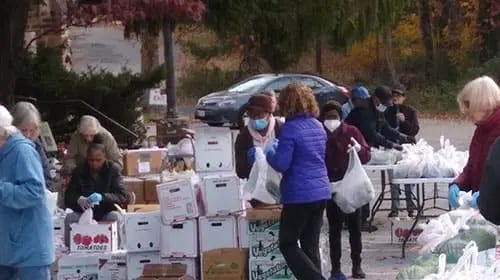
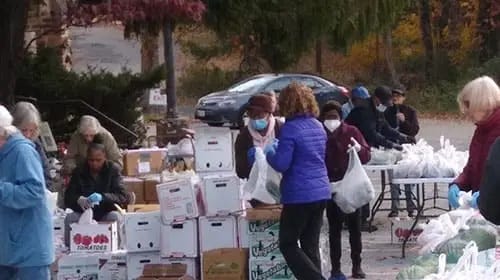
40 West Assistance and Referral Center
2026 Household Budget Squeeze
Data on family expenses highlights that nearly half of American families struggle to cover the true cost of living. Studies show that 49% of households lack sufficient resources to secure basic essential expenses in their local communities.
As fixed resource costs consume larger portions of family budgets, discretionary funds for nutrition and recreation shrink:
[ Fixed Expenses Rise ] ➔ [ Reduced Food & Recreational Budgets ] ➔ [ Consumer & Small Business Strain ]
While participation in informal outdoor recreation remains high, individual engagement frequencies have dipped due to economic tightening. Slower economic growth, interest rate burdens, and narrow margins have pushed several recreational and small businesses toward bankruptcy, taking jobs with them.
On a positive note: Participation in organized community sports, local initiatives, and self-sufficient activities like home crafting and birdwatching continue to surge as people adapt to tighter financial constraints.
Spheres of Influence & The Mouse That Roared
According to my friend Meriam, in international relations, a “sphere of influence” is defined as a claim by a state to exclusive or predominant control over a foreign territory or region.
Today’s global landscape is increasingly dictated by major powers: Russian President Vladimir Putin, US President Donald Trump, and Chinese President Xi Jinping. Observers frequently note that global policy resembles an attempt to carve the globe into three distinct spheres of control.
This geopolitical posturing brings to mind the classic satirical film The Mouse that Roared. In an era where many of us are trimming entertainment budgets to cover basic grocery bills, taking time to watch it for free (just click the YouTube link) offers a timely perspective.
Over to You
Do you remember watching The Mouse that Roared? Each one of us is a mouse who can roar back at the fat cats (a slang term for wealthy, powerful, and privileged persons). How do you see everyday individuals standing up against broad geopolitical and economic shifts?
Let me know your thoughts in the comments below!
Subscribing to my Substack won’t affect your budget. It’s always free!
Food chain collapsing…
actions, omissions starve kin.
Who decides who eats?
…
There’s enough for all…
beware cult of zero-sum.
Who should power wield?
I think we need to raise awareness of the world's food situation so we can act wisely to combat starvation. This is how we can wield power. As you wrote, "our omissions starve kin."