

This is a photo of my grandparent’s kitchen on Herkimer Street. That’s me in the highchair.
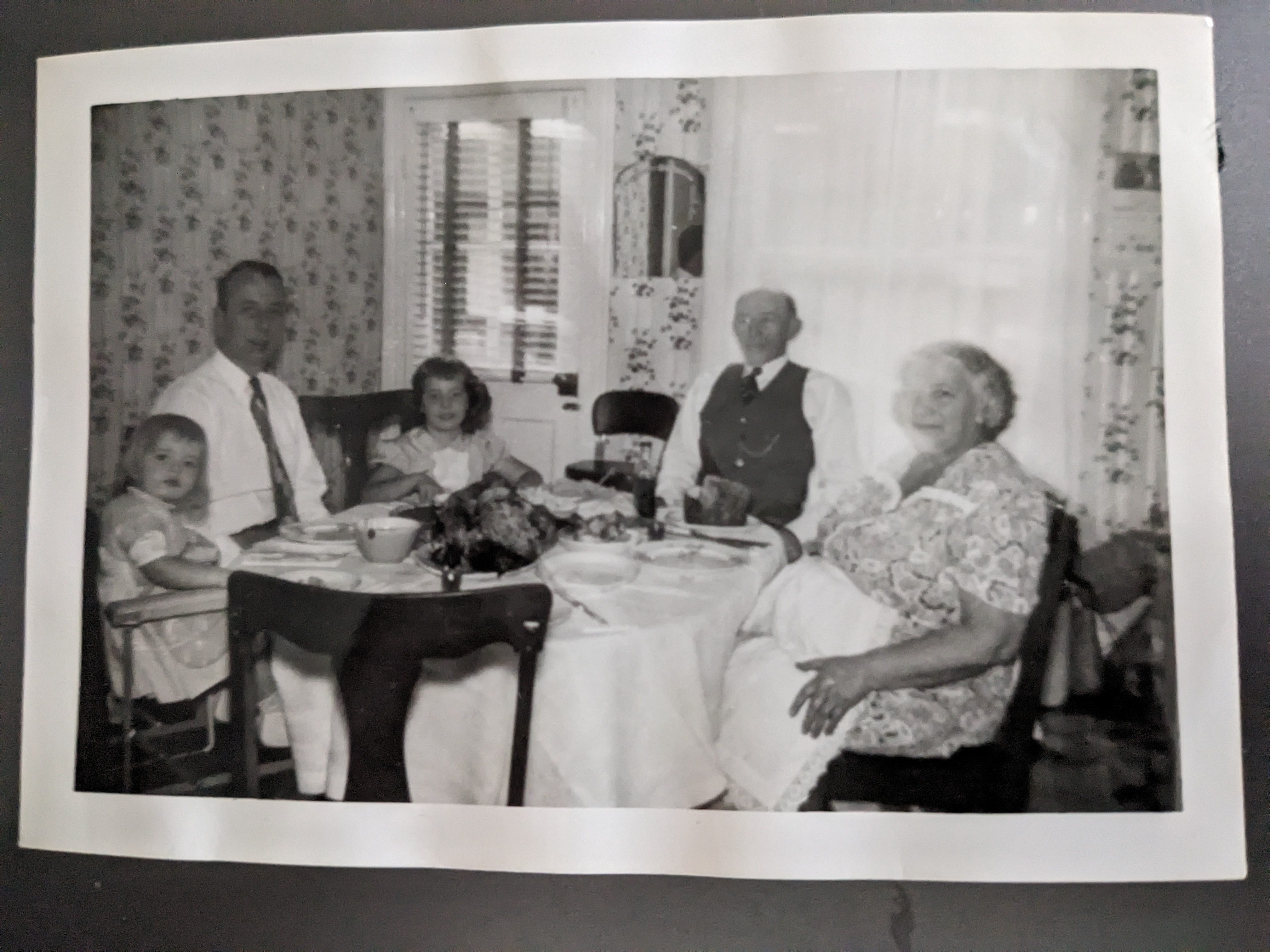
I found it while searching for photos to display at Old Major on Small Business Saturday. The note on the back says, “Thanksgiving, 1951.” The timing could not be more perfect.
When you read my book, Ona’s Tears, this is the Baltimore kitchen I describe. After dinner we moved to the parlor below. You will see the sofa next to the vestibule door, the window with the chair Annie sat in, and the radio she and Jonas listened to.
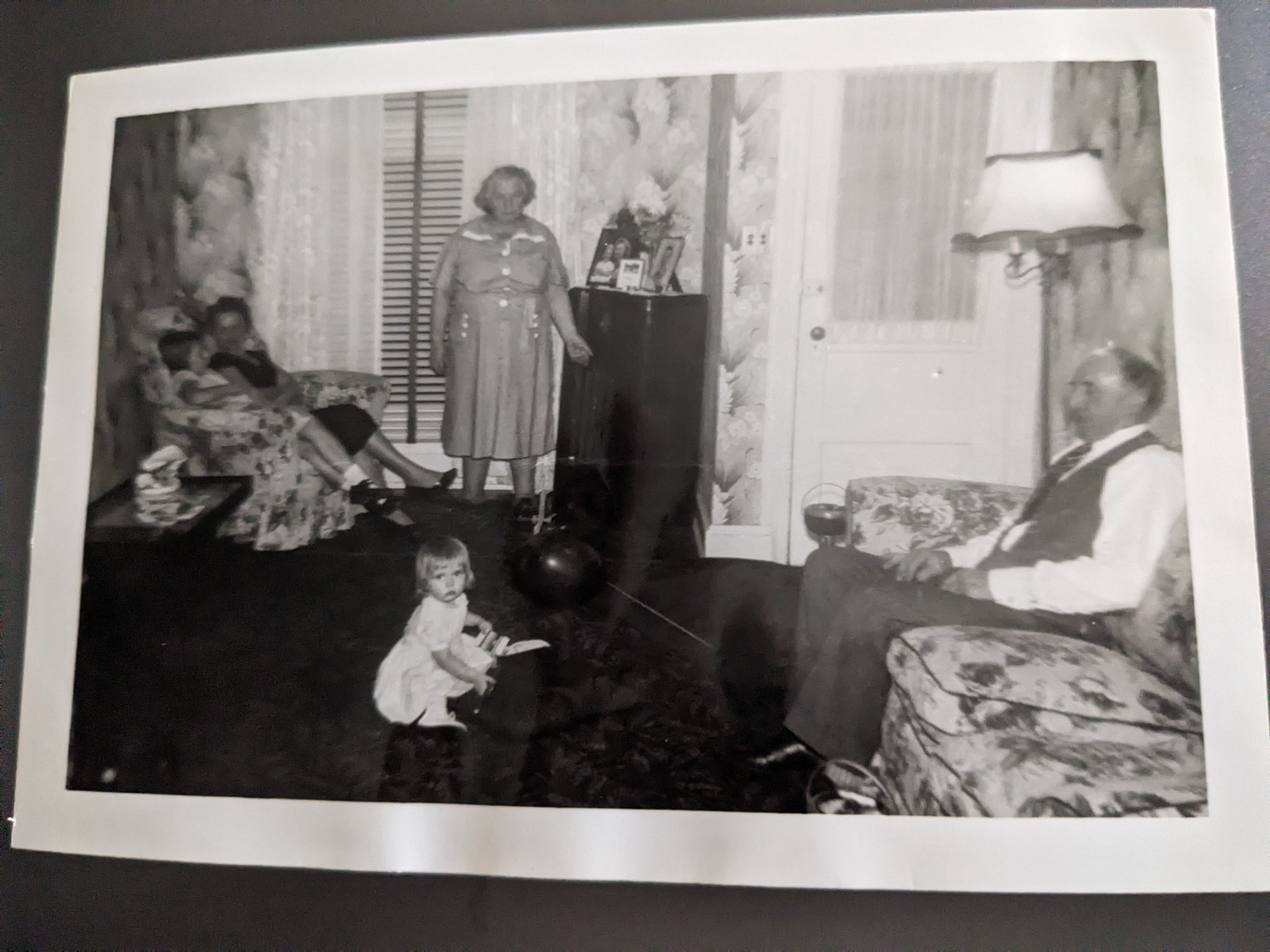
The Journey: From Troba to Row House
A Baltimore row house is nothing like a troba, which is a Lithuanian cottage or farmhouse. A troba had a thatched roof and a protected entryway.
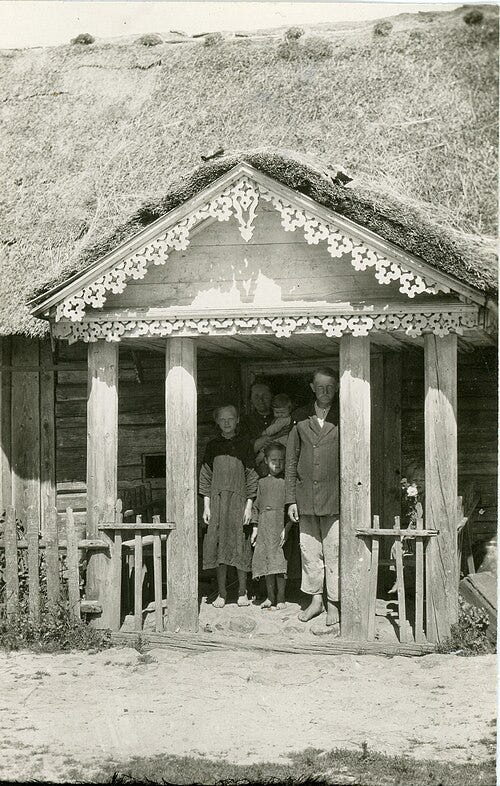
This 1927 photo, obviously taken in the summer given the bare feet, shows the intricate carvings on the eaves.
When my parents married, they lived in that Baltimore row house, saving enough money to eventually buy the home I live in today. As a white American baby boomer, I often hear the word privileged. But my family’s story, the one I tell in Ona’s Tears, starts not with privilege, but with struggle—a struggle against the kind of political and social forces that forced my grandparents out of their homeland.
A Cautionary Tale for Today
This journey—from a struggling cottage in Lithuania to a hard-won row house in America—is one of the main motivations for writing Ona’s Tears. My hope is that those who read it will recognize the cautionary tale it holds for America today.
American education is often myopic, teaching us little about the world history that shaped the immigrant experience. But as an academic and an observer of people, I believe my heritage grants me a different lens: one that recognizes that people are not bad, but belief systems can be.
I am profoundly thankful for my heritage because it keeps me in touch with a reality I can appreciate. It’s a lens that keeps me keenly aware of how quickly the few in power can divide us for their own gain.
Ona’s Tears is an historical immigration novel, but it carries a vital message for today: We have a lot to lose if we forget where we came from and stop asking questions.
We can be thankful for having a roof over our heads, but we must not forget those who lost their roofs due to the Russian bombing of Ukraine. The research I did to write my novel opened my eyes to Russian politics of conquering lands. They gained real estate but not the spirit of the people who refused to capitulate to Russian ideology.
Ukraine, like Lithuania, will fight to keep its sovereignty and identity no matter what peace deals are negotiated without their presence at the table. Zelenskyy was given up until American Thanksgiving Day to accept an American proposal for peace. Let us never forget this or what Russia wants.
Here is Zelenskyy’s response on YouTube:
IMPORTANT! Zelenskyy made a sensational statement about the US “peace project”!
When my family and I sit down to count our blessings this Thursday we will give thanks to our ancestors who fought oppression and remember the victims of genocide and mass land theft in hopes of a better world.

Thank you, Donna. I'm happy to share my journey with you.
It’s a learning history book for me ❤️