

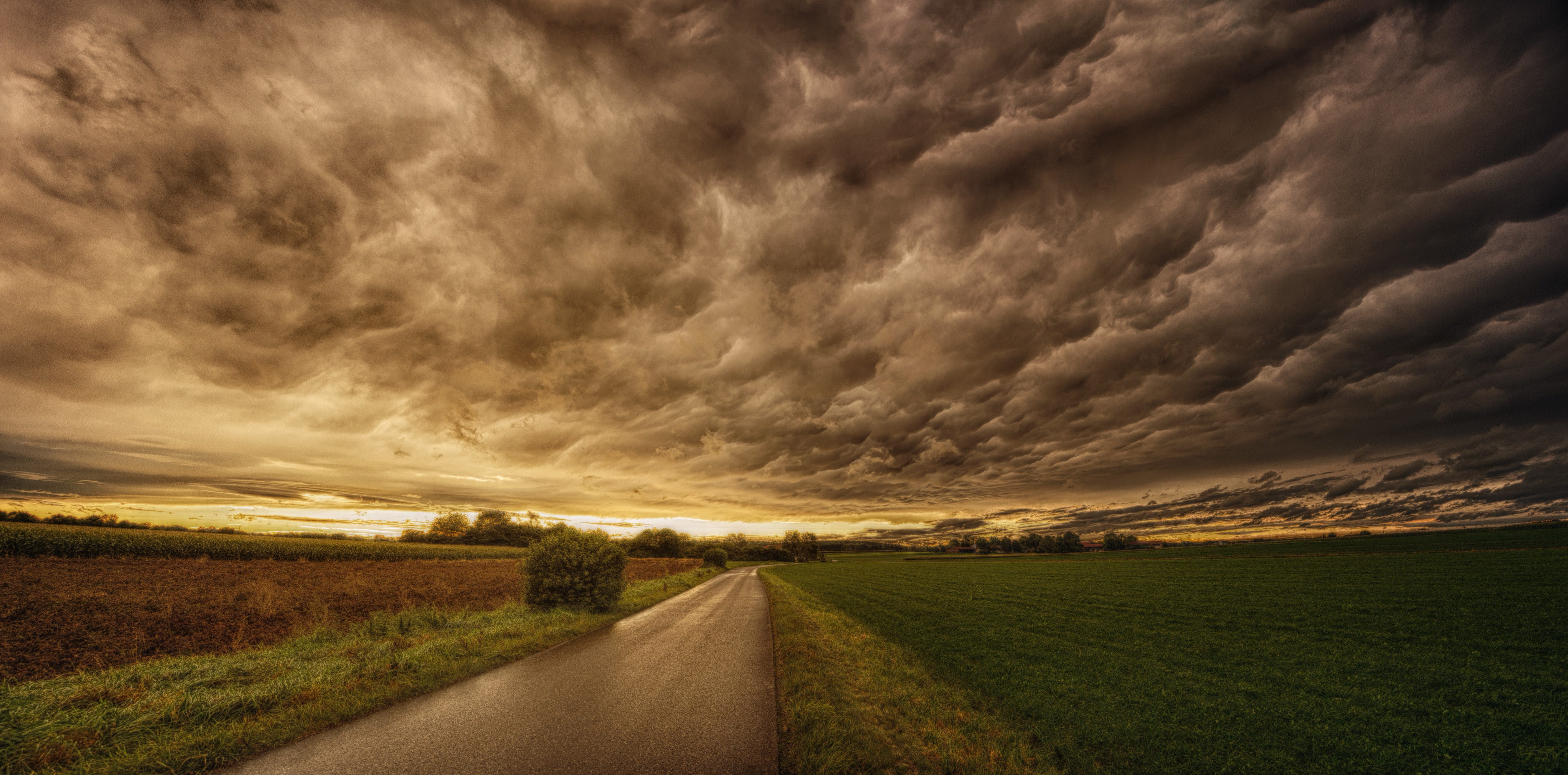
An Unfortunate Turn of Events
Since my last post, the world has experienced a relentless succession of headlines: earthquakes, heat domes, floods, fires, shootings, tornadoes, and wildfire smoke.
As of July 31, 2026, a total of 272 people have been killed and 1,195 wounded in 280 mass shootings across America.
At least 70 people died from extreme July 2026 heat domes across the United States, though official public health counts will take months to verify.
Meanwhile, although there have been at least 6,707 laboratory-confirmed cases of cyclosporiasis since July, no deaths in America have been linked to it so far.
Raise your hand if you haven’t kept up with all of these facts. It’s okay if you missed some or all of it. I predict that in about ten years, people will look back and discuss the Summer of 2026. Let’s hope future summers produce more nostalgia than despair.
Primary Election Ramp-Up & The “Rotten Pot”
On June 22, a Fox News opinion piece discussed how John Adams believed free nations and republics are rarely undone solely by external military threats. Instead, he argued, they rot from the inside due to moral decay, loss of civic virtue, and internal polarization. Adams maintained that a society relying on liberty requires a virtuous and disciplined populace; without restraint, excess and factionalism eventually destroy self-government.
Current headlines suggest our collective “rotten pot” is being stirred, and it certainly doesn’t resemble a floral bouquet. Doom and gloom are predicted regardless of who wins in November. Everything will be “their fault” once the votes are counted—leaving us to either catch our breath or choose to remain oblivious.
How We Consume the News
Many of us remember our parents opening a physical newspaper, tuning in to the radio, and planning dinner around the scheduled nightly broadcast. They listened to Walter Cronkite—CBS Evening News anchor from 1962 to 1981, often called “the most trusted man in America.”
Today, while some friends remain tethered to cable news, many in the 20–40 age bracket say they avoid the news entirely to focus on work without constant distraction.
The 2026 Digital News Report by Jim Egan (Reuters Institute) confirms this shift:
“Our 2026 report finds news audiences around the world reacting with growing unease to successive episodes of political, economic, and technological turbulence… The data point to greater volatility, reflecting a heightened sense of uncertainty. We see anxiety, disengagement, and cynicism, but also openness to new sources and formats.”
I strongly suggest you read the summary or full Digital News report .
Flooding the Zone
A recent Substack post I read mentioned the strategy of “flooding the zone with s--t.” Seeking a deeper perspective, I came across an insightful guest post by Zsolt Kapelner (University of Oslo) on Justice Everywhere:
“Flooding the zone as a political strategy aimed at decapacitating public deliberation... is not simply a dirty tactic, but an inherently antidemocratic one. What threatens democracy today is not only fake news, disinformation, and polarization. It is also the destruction of our capacity for collective attention.”
In her keynote speech at the Congressional Reason Reception on July 28, Mary Trump asked:
“Who are we now? Is this who we want to be? If it is not, then who do we want to become, and how do we get there?”
These are essential questions—for us as individuals and for our democracy.
Lessons from Lithuania and Ukraine
Are we going to “rot from the inside”? My preference remains reconciliation—rebuilding trust and safety across groups. We do that by seeking information from varied sources rather than drowning in the flood. Let’s put out the fires between factions and take care of our fragile island home.
Are we going to be undone by external military threats, or will our own actions become our undoing?
The Middle East: Armageddon was only supposed to last four weeks; we have now passed five months with 18 U.S. service members lost. As of five days ago, only 1 in 3 Americans support the ongoing war in Iran.
Ukraine & Imperial History: Many Americans wonder why we should support Ukraine. In my book, Ona’s Tears, I wrote from my fictional great-grandmother’s point of view about Lithuanians living under Russian imperialism, where speaking Russian was enforced as part of forced assimilation—a form of cultural genocide.
There are some of us who wonder if we are on the verge of World War III which Ukraine may already be winning for an oblivious West.
“Only one country fully understood what was at stake on a global basis: That was Ukraine, of course. By merely resisting and refusing to capitulate to Putin, Ukrainian President Volodymyr Zelensky and his generals were holding back a tide of global setbacks for the West….It seemed Putin and Xi’s visions of a new multi-polar order were openly clashing with traditional Western-style liberal democracy that had largely ensured global peace since the end of World War II in 1945. And the bad guys were winning.”
Lithuania and Ukraine share this history of resisting totalitarianism. During a recent European Union Defense Night in Washington, D.C., EU Defence Chief Andrius Kubilius (from Lithuania) called for stronger European security, declaring “We Need NATO 3.0” as Russia remains a critical long-term threat.
Kubilius closed with typical Lithuanian humor, recalling how descendants of Europeans built America—one was Charles Dennis Buchinsky born in Ehrenfeld, Pennsylvania, whose Lithuanian parents lived in extreme poverty speaking only Lithuanian and Russian. When Charles was young, his coal miner father died and he too worked the mines. Later he served as a WWII Air Force veteran before building his life in the U.S. as actor Charles Bronson.
Kubilius reminded us that Lithuania and America share values of unity in diversity, bound by the motto E pluribus unum. We share the duty of resisting totalitarianism and deterring aggression. Who can argue with that?
If you want to hear more from Andrius Kubilius on European defence and security strategy, you can watch the ‘We Need NATO 3.0’: EU Defence Chief Andrius Kubilius Speech. This video provides direct context on the “NATO 3.0” proposals mentioned in my post regarding transatlantic security and Ukraine.
Is the news making your head spin? What do you do to calm your mind? I garden, work on jigsaw puzzles, foster dogs, plan getaways to be with friends and family, among other things. As always, thank you for reading.
Living in this chaotic time can be exhausting. I turn to music and most recently the filmed WestEnd theatre production of the musical Hadestown. An amazing story available in theaters for short runs. Well worth it!
Thanks for the movie recommendation. We all need a break from news whiplash. I picked up a new foster dog yesterday. He needs some work to get ready for adoption. I get a great sense of satisfaction when one of my "babies" gets adopted and not returned.