

I want to share some of the little-known history of Lithuania. I hope this answers many questions for my friends and others who want to know more about human resilience especially during this time of world conflicts. There is hope for those of us who feel overwhelmed when events seem to be beyond our control.
My visit to Lithuania was more than a sightseeing trip. I was there to absorb my roots. I became fascinated with housing. Where did they live? My grandparents emigrated in 1905. My maternal grandmother left her family at the age of 16. Her 18-year-old sister stayed behind, married, and had a son and a daughter. In 1966, my mother received a letter from her cousin. We mapped her address in Šiluva, and drove to a lovely renovated home that was originally part of a manor.
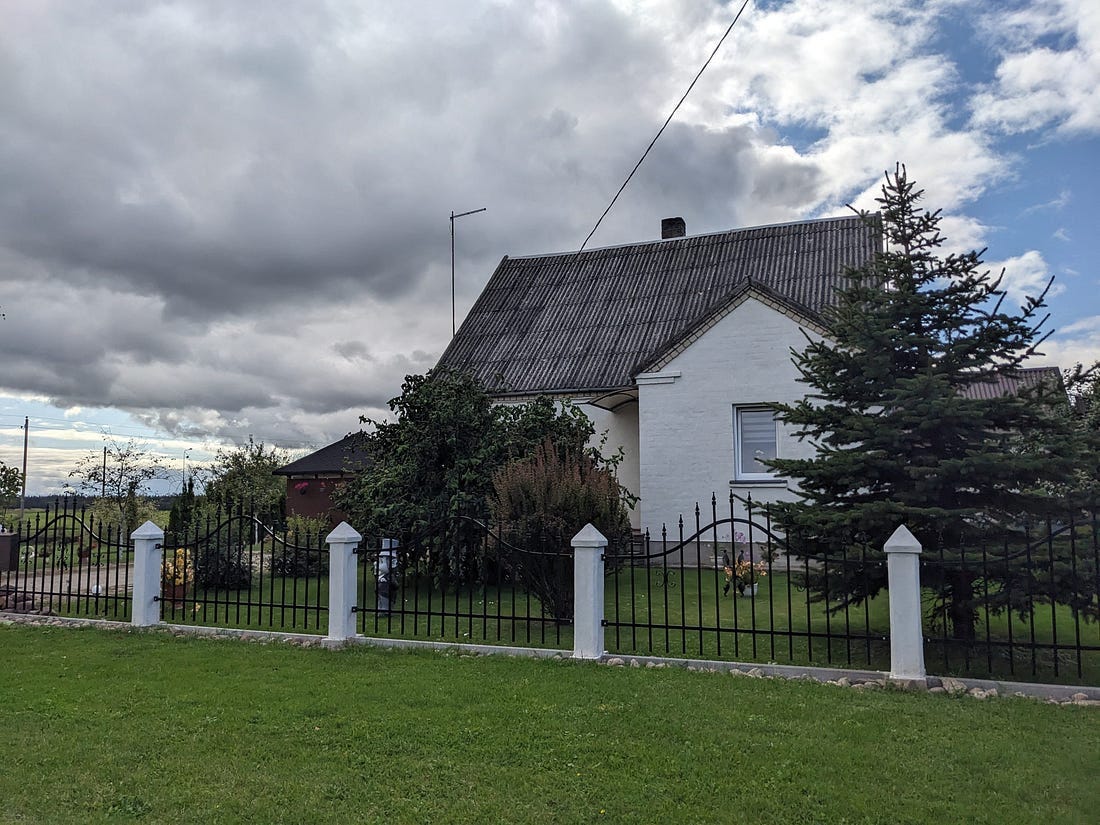
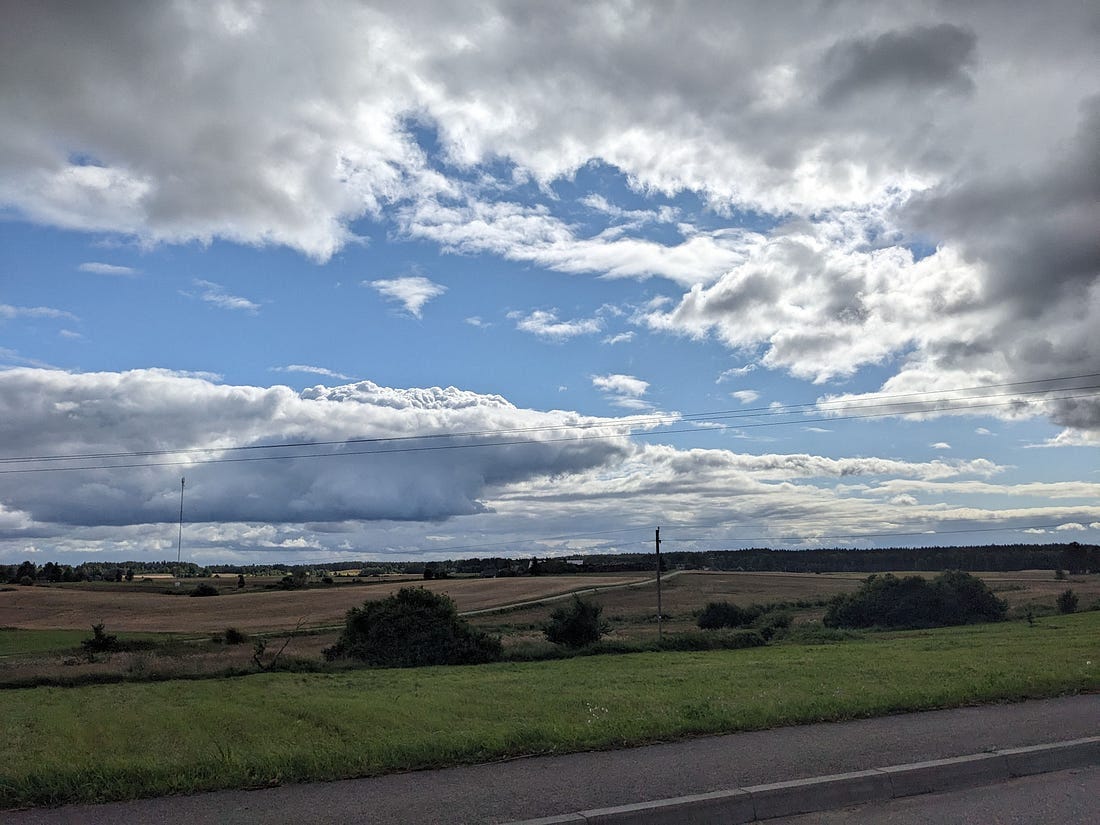
The open field across the road would have been the farm the family worked on. Her cousin died in 1992, and I can only speculate on who lives there now.
The house and farm would have belonged to Lithuanian serfs owned by the manor. When the serfs were emancipated in 1861, they were given title to their plot of land and a tax bill. The land could not be sold, only passed down through the family, however: “Lithuanian landowners were not able to adjust to the new economic conditions brought about by the abolition of serfdom and many of them did nothing to maintain and improve the productivity of their lands. After the revolt of 1863, in which many landowners took part, the Russian government imposed very heavy taxes upon Lithuanian estates and did not grant them loans easily. Year after year, Lithuanian landowners sank deeper into debt.”
As we drove through the small towns I noticed many clusters of these small houses, some in disrepair and others in various stages of renovation. It made me wonder about the period between the manor farms and collective farms. This is what I learned. “Before the first world war, 90% of the land area of the estates was mortgaged. The indebtedness of many estates reached 100% of their worth. The debt laden estates could be purchased by Russian colonists on favorable terms, while land purchases by Lithuanians were very severely restricted and, in 1901, completely banned.” Old Lithuania
At the end of the Great War, Lithuania gained independence. Here is an interesting article if you want to know more. Lithuania-1914-1918/
Many landowners returned to claim their property only to be swallowed up by collective farms. Those who resisted were met with coercion or sent to labor camps. Soviet watertowers dot the landscape as reminders of Soviet occupation. “Soviet troops executed some 1,500 Lithuanians between April 24 and June 26, 1941, and some 12,600 Lithuanians were deported to the Soviet Union on June 14-18, 1941.”Soviet Occupation
“On March 11, 1990, Lithuania declared that it was an independent nation, the first of the Soviet republics to do so.” Lithuanian Independence
After 49 years of occupation, Lithuania worked hard to restore itself and is working hard to protect itself from any future occupation. There are lessons to learn from history. I have more stories to share in future postings. Please leave comments if you want to be part of the conversation.