

NASA Science
Early Sunday morning I read two posts. The first was a story shared on Facebook about a woman with a spinal cord injury; the second was Kert Lenseigne’s Substack post about observing the Sabbath. This isn’t meant to be a debate on religion, but a look at how belief systems are formed.
Biology Lesson
Biology is a hard science built on refutable research. Experiments and continuous study explain what people once thought was unexplainable.
According to AI, the origin of life on Earth—known scientifically as abiogenesis—is the gradual natural process by which simple organic molecules gave rise to self-replicating, living cells.
abiogenesis (ˌā-ˌbī-ō-ˈje-nə-səs): the origin of life from nonliving matter.
— Merriam-Webster
I don’t have a PhD in human evolution, so I did some thorough research—including asking AI—to get the facts on human origins once cell division produced our ancestors:
“Population genetics shows humans evolved from an ancestral population of thousands of interbreeding individuals, not two isolated people.”
I find it hard to believe that humans can trace our origins to an original Eve. I accept that we migrated out of Africa, and that distinct regional traits developed over time through migration and genetic adaptation to different environments. No literal Adam and Eve for me—though it remains a compelling story.
Religion Lesson
When I took a Comparative Religions course around 1970, I learned to view religion, at its root, as a way humans try to explain the unexplainable. For academic grounding, look at G. William Barnard’s review in the Journal of the American Academy of Religion (July 1992), “Explaining the Unexplainable: Wayne Proudfoot’s ‘Religious Experience’” (examining Proudfoot’s work on religious experience). If you search the meaning of religion today, you’ll mostly find lists of denominations—but the underlying human impulse goes much deeper.
Reading the Two Posts
The Facebook story about a woman who suffered a spinal cord injury was meant to highlight strained family dynamics and spark a discussion. Instead, it pulled me straight back to my Anatomy and Physiology lab more than 50 years ago, when we had to pith a frog using a very low-tech instrument: an unbent paper clip. Today, using live frogs that way raises clear ethical concerns, so I’ll skip the lab details. In the story, the woman survived after falling backward onto a hairpin that severed her spinal cord, leaving her unable to move.
Right after that, I read Kert Lenseigne’s post tracing his journey from a Catholic upbringing through questioning religion and the existence of God, closing with a nod to Ram Dass:
“I don’t see any other reason to be alive than to be kind. All we are really doing is walking each other home.”
“We are in the Universe to inhabit the lovely eternity of our Souls and grow real. Our great duty as humans is to sow the seeds of compassion in each other’s hearts.”
Sunday Forum Coincidence
The church I attend is full of thoughtful, quirky people who enjoy tackling complex questions between services. To my surprise, our conversation picked up right where Lenseigne’s post left off. Whether people hold to traditional faith or step away from it, many of those paths start from the same place: trying to make sense of what we can’t immediately explain.
We wrapped up our discussion with broad agreement on that closing thought: our great duty as humans is to sow the seeds of compassion in each other’s hearts.
Harvest Festivals vs. Thanksgiving
When you look at how traditions take shape—from ancient seasonal harvests to modern holidays—where do you draw the line? Are harvest festivals and Thanksgiving secular, religious, or both?
Let me know what you think in the comments.
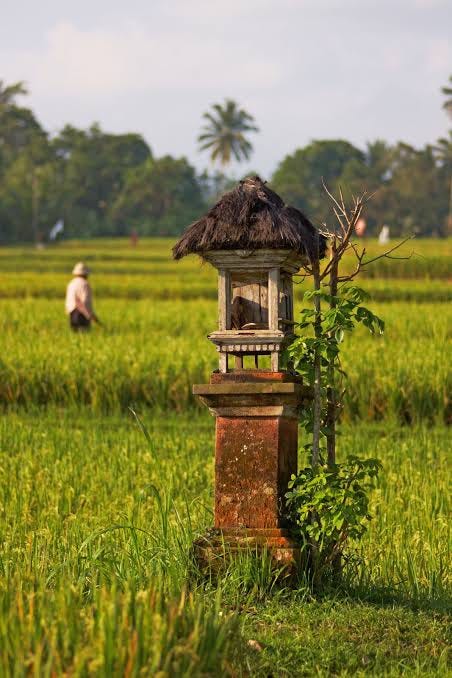
Thanksgiving is both secular and religous. Harvest festivals predate religion in many instances. It's a chicken or the egg trick question!🐣
The answer depends on whether or not you believe in God and the Bible. The Pilgrims came here for Religious autotomy.